Example detail
Stored learning example with evidence status below
Handling Cancellation Requests with Empathy
An estimated five-minute microlearning example where support agents practise acknowledging emotion, diagnosing a cancellation request and choosing a suitable next step.
Structure
6
Screens with 3 interactive checkpoints
Difficulty
Intermediate
About 5 minutes, estimated from the example data
Delivery
Preview
Interactive learner preview and on-demand SCORM 2004 package
What this example proves
Section types in this stored example: context, decision, flashcard, question, feedback. Later edits not independently recorded. SCORM 2004 generated on download request; no per-example lms test recorded. Preview and package creation do not establish learner outcomes.
Interactive preview
Microlearning · 6 sections · Fully interactive
Acknowledge, Diagnose, Then Guide
- Lead with empathy before problem-solving.
- Use neutral questions to uncover the real reason.
- Recommend the next step that fits the cause—even if that step is immediate cancellation.
Prompt in
Create a microlearning module for customer support teams on handling subscription cancellation requests with empathy, diagnosing the root cause, and offering the best next step without sounding pushy.
Inside this example
What the stored output shows
Curated for customer support and success teams with a intermediate learning curve.
3 interactive checkpoints across context, decision, flashcard, question, feedback.
A one-sentence brief became a six-section microlearning: a live-chat decision scenario with graded consequences, a five-card diagnostic flashcard deck, multi-select and matching questions backed by comparison tables and a cause-to-action flowchart, and a three-question final assessment with an 80% pass mark.
SCORM + hosted plus a reusable prompt seed for your review workflow.
Learning objectives
Section walkthrough
What the learner sees
Navigate through sections using the interactive preview above.6 screens with 3 interactive checkpoints.
Regulation context
Compliance references carried into the output
Related examples
Keep browsing adjacent use cases.
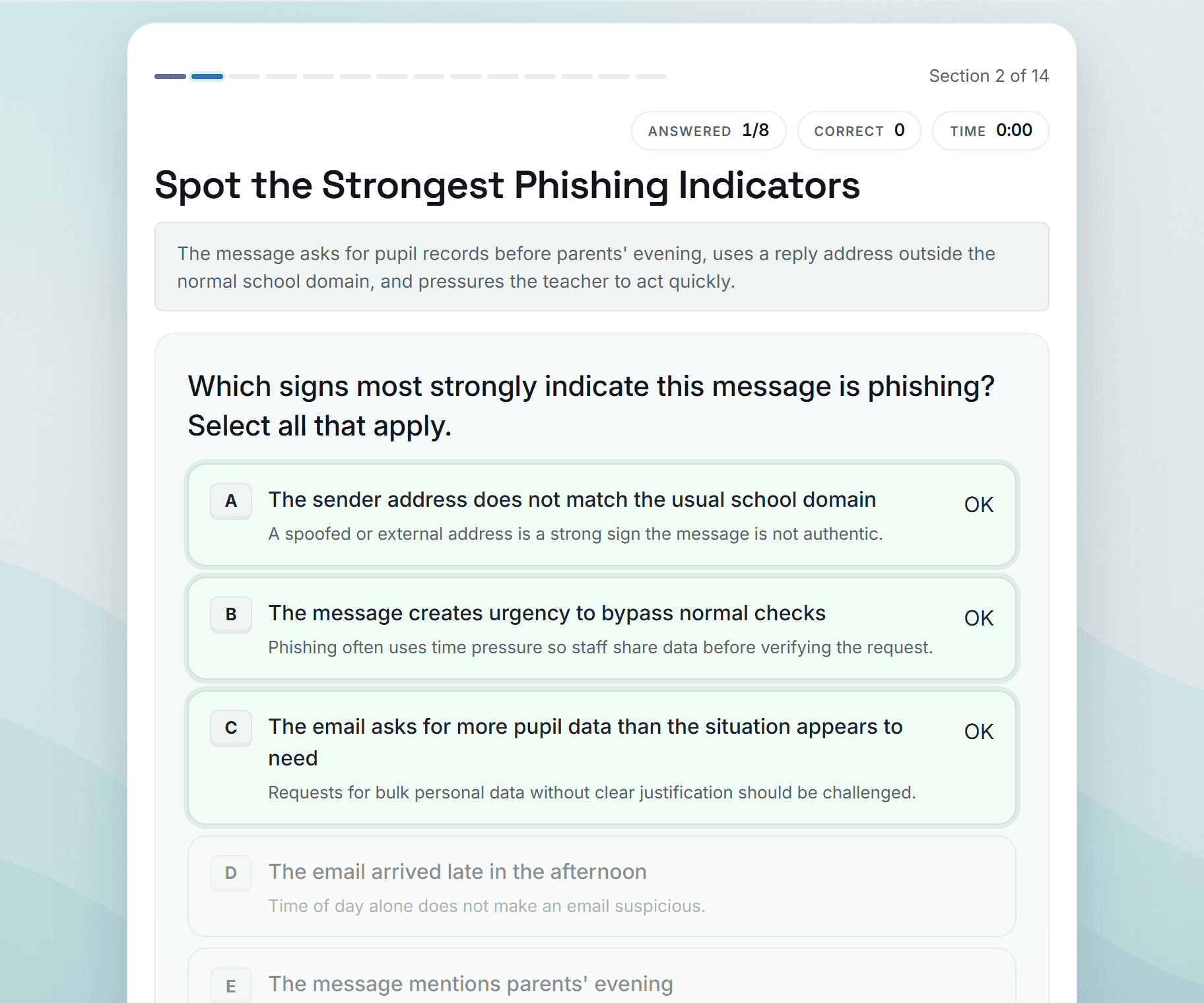
School Staff Cybersecurity and Data Protection Refresher
A phishing and pupil-data-protection refresher example for secondary school staff. Its UK GDPR and school-policy references need qualified review before use.
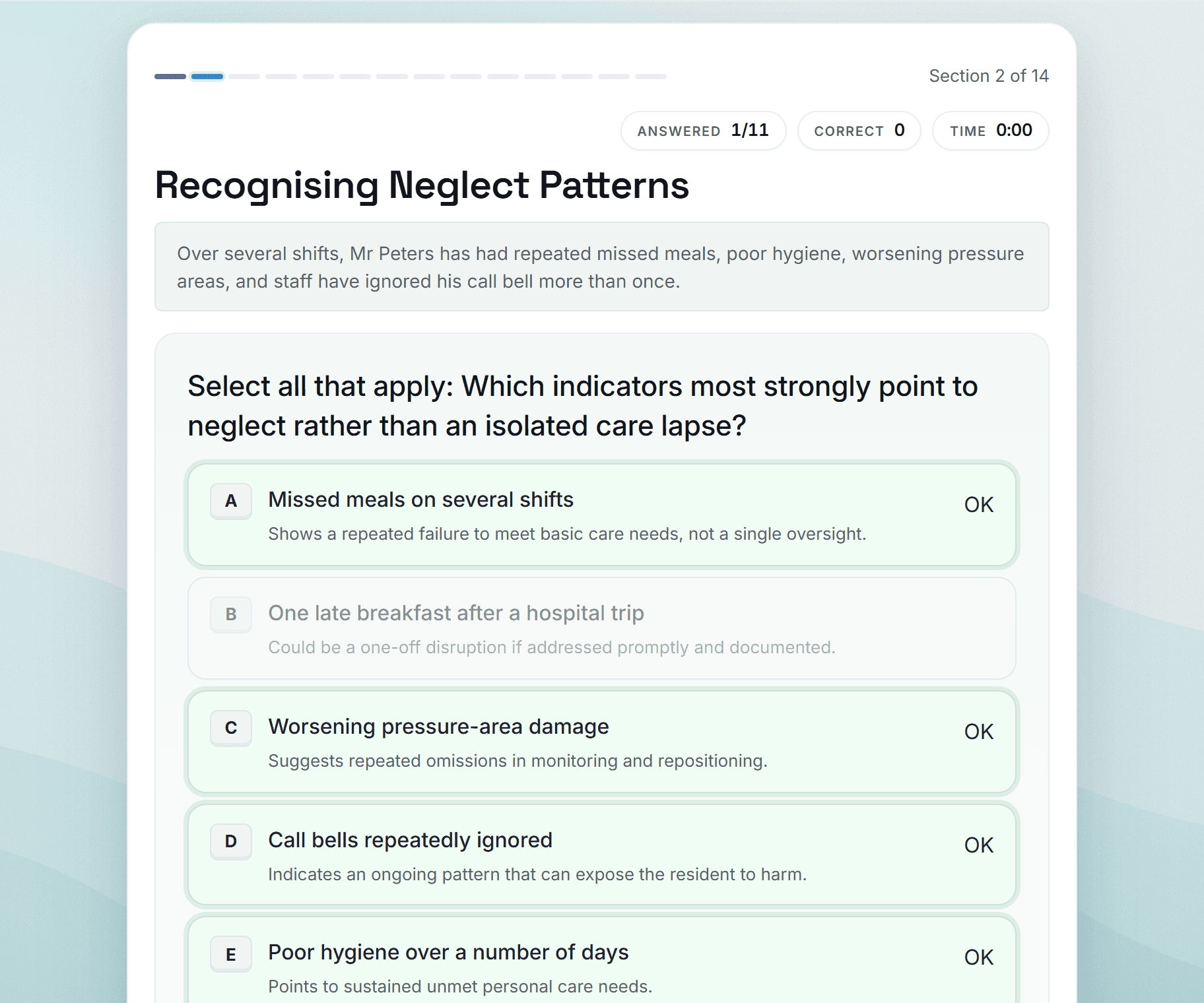
Safeguarding Adults End-of-Induction Competency Assessment for Care Home Staff
A safeguarding adults assessment example for care home induction. A qualified reviewer must check its Care Act references and local escalation steps before use.
Build your own version
Start from this prompt and make it yours.
Use this as an illustrative starting point, then generate and review a version tailored to your team, policy context and delivery workflow.